



The Boy at the Back of the Class
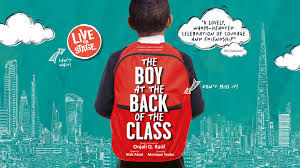
The Boy at the Back of the Class, the Belgrade Theatre from 25 – 28 February 2026.
Based on the novel by Onjali Q.Rauf. Adapted by Nick Ahad. Directed by Monique Touko.
Preview
After delighting audiences across the country, the smash-hit, joyful play based on the best-selling novel is back with a celebration of friendship kindness and compassion.
There used to be an empty chair at the back of the class, but now a new boy called Ahmet is sitting in it. He’s nine years old (just like me), but he’s very strange. He never talks and never smiles and doesn’t like sweets – not even lemon sherbets, which are my favourite!
After learning that he has fled his own war-torn country, Ahmet’s classmates have ‘The Greatest Idea in the World’ – a magnificent plan to reunite Ahmet with his family. An unexpected and often hilarious adventure follows, all topped off with a terrific twist.
Told from a child’s perspective, balancing heart and humour, The Boy at the Back of the Class highlights the power of good friends and courage in a world that doesn’t always make sense and reminds us that everyone needs a place to call home.
In an interview, author Onjali Q.Rauf was asked: How important is it that children are taught to understand why people become refugees?
She answered: “It's of vital importance. I mean, how on earth are they going to be able to understand any of it if they are not given safe platforms for questions and safe access to real information? We are living in a world where our kids are inundated with news that has an agenda of its own. Nothing is neutral anymore. I think we're all waking up to that, but it's so much more relevant for our children to have safe access to stories that humanise what they're seeing on their television screens, on YouTube or wherever it is they're getting the information from – for them to understand that there is a history behind everything and that we are all linked. It's a global issue, it's not just a one-off thing happening somewhere far away. We're all interlinked and when they grow up they may even go on to help with the situation. That's where the hope lies. Right now we don't seem to have leaders in power who are capable of humanising the people that they are wilfully dehumanising for their own ends. It's going to be our children who are going to face the wrath of all of that.”
Nick Ahad who adapted Onjali’s book for the stage was asked: What attracted you to Onjali Q. Raúf's novel as the basis for a stage adaptation?
He answered: “The story is really important and so huge-hearted. And it's a story that tackles possibly the biggest question that faces us as a society, which is: "How do we want to treat people that need our help?" The book does that magnificently and it's such an honour to have been trusted to tell this story on stage.
Nick was also asked: Do you feel it's important that children are taught to understand why people become refugees?
He answered: “Absolutely. On the first tour we got loads of letters from school kids that had come to see the play and there's one in particular that I still remember. It was from a little girl and she'd said: "I've never met a refugee before but after seeing the play I'm going to make friends with one." Refugees and asylum seekers have become the bogie man, thanks to the stories that we're told, but this story shifts that narrative shifts. It asks young people: "Have you actually met anyone who's been through this?" The stories that we're hearing are that when these young people do meet refugees or asylum seekers they discover that they are just human beings like them.”
The Boy at the Back of the class is suitable for ages 7 and up.


Comments