



The Man Who Would Be King – Bold new take on Macbeth has lessons for Sky Blues

Crown of Blood, Belgrade Theatre, 11 Feb
Review By Amanda Burden
Hubristic horoscopes, ambition thwarted, good intentions gone astray… no! It’s not the story of Coventry City Football Club’s current promotion campaign, silly. This is Crown of Blood, Mojisola Kareem’s striking new take on Macbeth at the Belgrade Theatre.
That said, there are parallels between the Sky Blues’ spiky trajectory of late and the fortunes of Shakespeare’s beleaguered king. Just as the naysayers at the start of the football season predicted our chances of promotion were roughly equivalent to a fleet of flying pigs gracing the skies, this production opens with a series of extraordinary portents. Snake-tressed women birthing antelopes, weeping dogs and even an aerodynamic elephant have apparently been sighted in the West African province where the action unfolds. It can mean only one thing: Aderemi (Deyemi Okanlawon), an upstart hero warrior freshly returned from battle, is destined for the throne. Or so his wife Oyebisi (Kehinde Bankole) would have him believe.

Thankfully, I’m now all out of tenuous CCFC comparisons, so without further ado I’ll crack on with the review.
I’ve seen Macbeth transplanted to all manner of settings, from Nazi Germany to a Victorian factory floor. Yet this reimagining really hits the spot. On the surface, Africa might seem an incongruous replacement for the windswept moors and forests of Scotland, but within the logic of this production it makes complete sense. Here, the supernatural is not folklore or fairy tale but inextricably woven into politics and everyday life. Interpreting messages from gods, spirits and unseen forces is routine, making Aderemi’s ruthless pursuit of ambition feel less like a descent into madness and more like the fulfilment of an inescapable destiny.
Against this backdrop, Okanlawon and Bankole avoid becoming pantomime villains, instead presenting flawed, recognisably human figures. Oyebisi’s ambition is rooted in trauma: a past of brutality and enslavement, her royal status stripped away as she watches her family slaughtered. Aderemi, meanwhile, is the son of a lowly blacksmith. Together, they want to change history. They have everything to gain and nothing to lose.
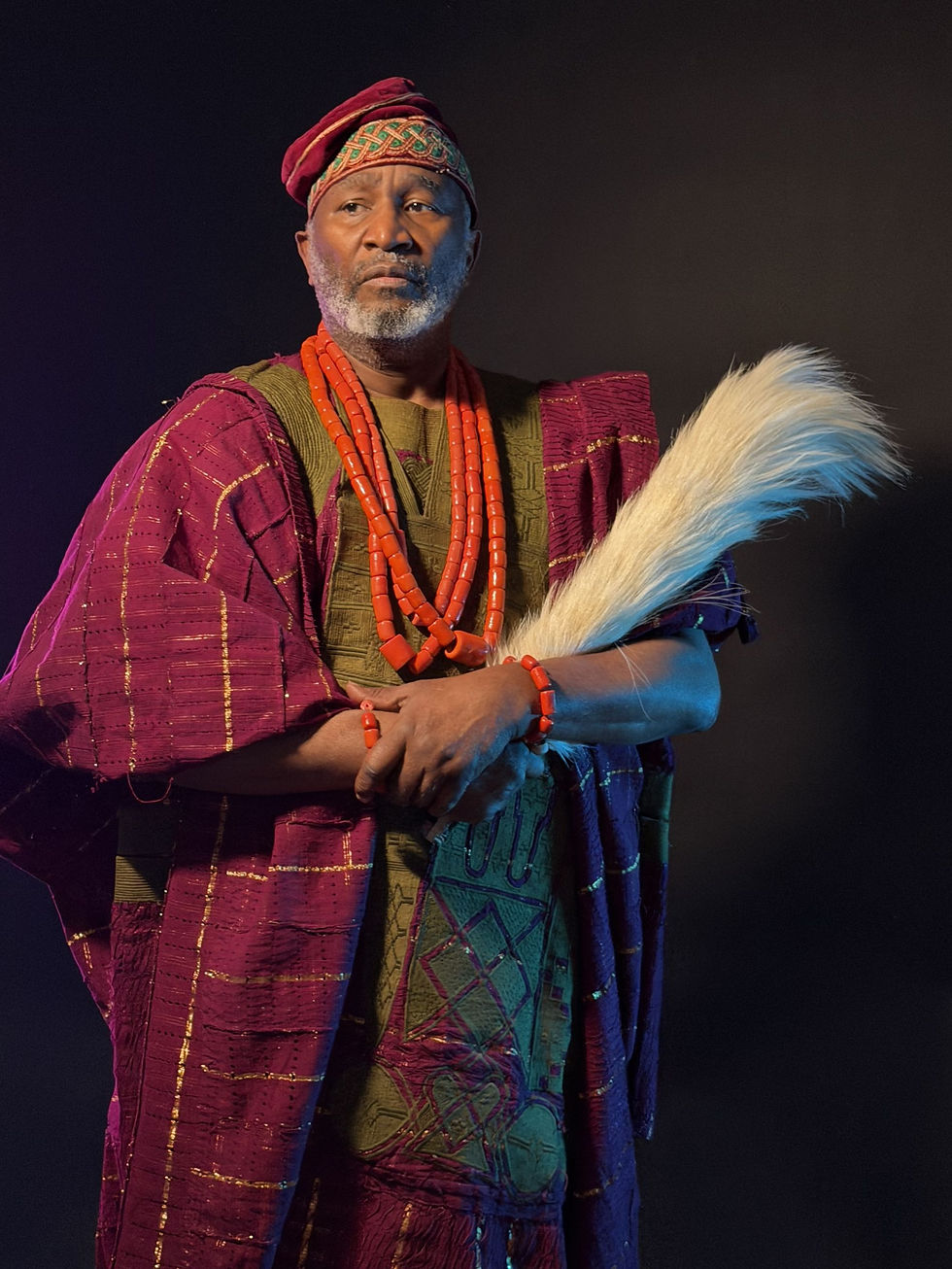
Okanlawon convincingly charts the hero-turned-tyrant, a man seduced by the promise of a destiny not entirely his own. Bankole’s Oyebisi, while far from a sympathetic Lady Macbeth, feels particularly resonant in the context of the MeToo era. Her hunger for power is not just naked ambition but a fierce determination never to be subjugated again. Seeking vengeance for her ancestors, she gives fate a helping hand by blackmailing a soothsayer into confirming that Aderemi’s kingship is written in the stars. Here, the moral rot lies not in the desire for success, but in the blind certainty of its arrival at any cost, sanctified by the gods.

I know I said I wouldn’t stray back into football analogies, but this thought-provoking production got me pondering. What if the predictions and portents themselves are the problem? Macbeth – or Aderemi – comes unstuck by listening to false prophecies. Similarly, the hype surrounding the Sky Blues’ former unbroken run of wins must have created its own artificial pressure on the pitch. Perhaps the real takeaway is that discipline and focus on what lies immediately ahead, rather than being distracted by what might be, is the key to success.
There we are. Job done. All the Belgrade needs to do now is send tickets for this production to Frank Lampard and Doug King, and promotion is guaranteed. See you in the Prem.


Comments